Vehicle Immobilizers: The Part That Keeps Your Car From Starting (And Sometimes Does It When It Shouldn't)

If your car won't start and the key is fine, the battery is fine, and the starter cranks just like it always has — but the engine refuses to fire — there's a good chance your immobilizer is involved. It's one of the more confusing corners of automotive electronics, partly because every manufacturer gave their system a different name, and partly because most people don't know the part exists until it stops working.
After 30 years in automotive parts, I've seen this failure pattern more times than I can count. Here's everything you need to know.
What Is a Vehicle Immobilizer, and What Does It Actually Do?
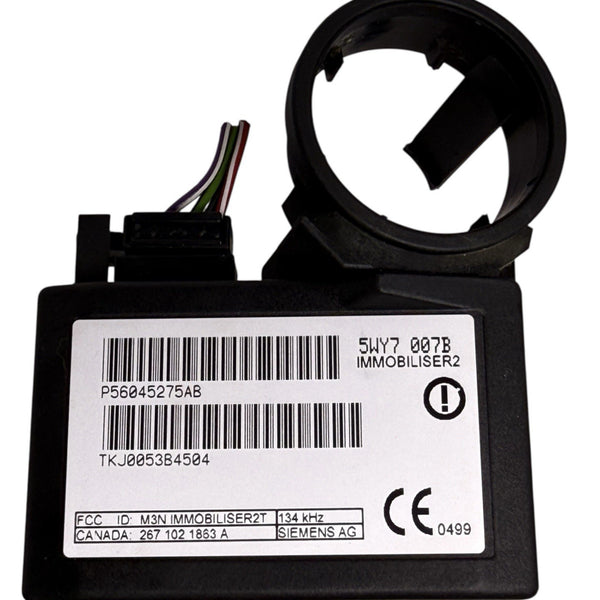
An immobilizer is an anti-theft system built into the vehicle's electronics. It works by requiring a specific coded signal from your key before it allows the engine to start. When you insert the key and turn the ignition, a transponder chip in the key communicates with a transceiver ring around the ignition cylinder, which passes the signal to a control module. If the codes match, the car starts. If they don't — or if the module can't read the key at all — the engine is electrically disabled. It won't crank, or it'll crank without firing, depending on the system.
The result from the driver's seat: your car won't start, and the reason isn't anything obvious.
Which Automakers Used Which System?
This is where it gets confusing, because Ford, GM, and Chrysler all developed their own immobilizer systems, gave them proprietary names, and didn't make them interchangeable.
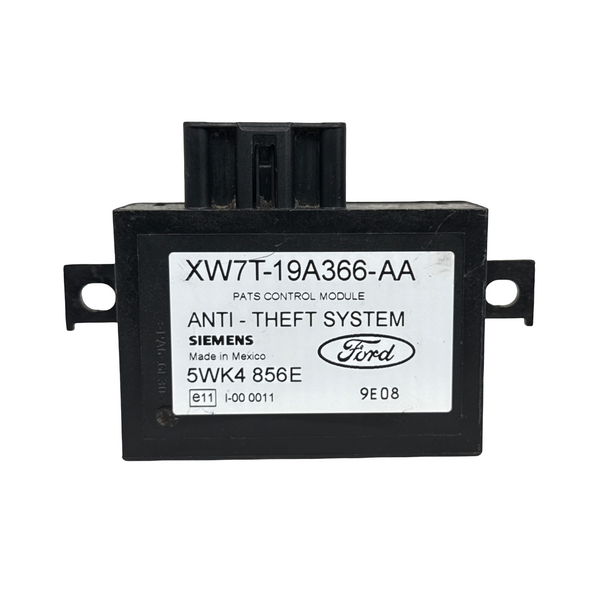
Ford — PATS (Passive Anti-Theft System) Ford introduced PATS in 1996 on the Mustang and rolled it across the lineup through the early 2000s. The system uses a transponder chip in the key and a transceiver ring mounted around the ignition. PATS evolved through several generations — with differences between them in how they handle key programming — and if the transceiver ring fails (which it does), you'll see a theft indicator light flashing and a no-start condition. Common vehicles: F-150, Explorer, Expedition, Focus, Taurus, Mustang.
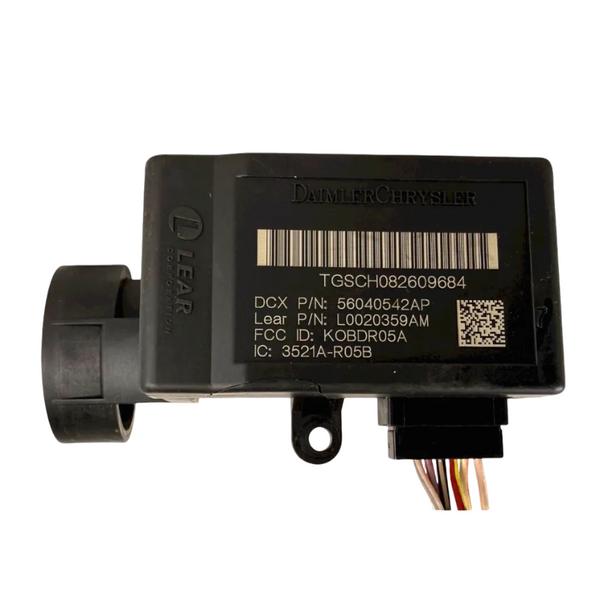
Chrysler, Dodge, Jeep — SKIM (Sentry Key Immobilizer Module) Chrysler's version showed up in the late 1990s across Dodge, Chrysler, and Jeep platforms. The SKIM module is a separate unit — typically mounted near the steering column — that manages the transponder communication and talks to the PCM (powertrain control module). When a SKIM fails, you'll often see a security light, a stored code like P1686, or simply a no-start with no helpful codes. (A "No Bus" message on the cluster is a separate, broader fault — a loss of communication on the car's data bus, usually wiring or the PCM — so don't read it as the SKIM on its own.) Common vehicles: Grand Cherokee, Cherokee, Ram 1500/2500/3500, Durango, 300, Wrangler.
GM — PassKey, Passlock, and VATS (Vehicle Anti-Theft System) GM had three different systems across roughly 1986–2007, which is part of why their immobilizer story is complicated. VATS used a resistor pellet in the key blade itself. Passlock used a magnetic (Hall-effect) sensor in the ignition lock cylinder. PassKey III used a transponder. They're not interchangeable, and the failure modes are different for each. Common vehicles: Silverado, Tahoe, Suburban, Impala, Grand Prix, Cavalier, Malibu.
Other manufacturers — Most European brands (BMW, Mercedes, VW) and Japanese brands implemented their own transponder systems, often integrated more deeply into the BCM (body control module). If you're working on something outside the Ford/GM/Chrysler family, the same principles apply but the specific modules and programming procedures will be different.
Why Do Immobilizers Fail?
Immobilizer failures fall into three categories.
Module failure. The SKIM module, PATS transceiver, or GM Passlock sensor wears out or loses its programming over time. This is a common cause of a true immobilizer failure — the hardware has failed, and it needs to be replaced.
Key chip failure. The transponder chip inside the key can fail. It's not the battery (most immobilizer keys don't use the key's battery for the transponder signal — that's for keyless entry). The chip itself deteriorates or gets damaged. If your key is worn, cracked, or has been in a serious impact, the chip may be the problem before the module.
Programming loss. Occasionally, especially after a battery replacement, dead battery, or PCM replacement, the vehicle loses the programmed relationship between the key and the module. The parts are fine — they just need to be re-synced.
Can an Immobilizer Be Repaired?
Sometimes. A module that's failed due to software corruption may be reflashable — a dealership or qualified automotive locksmith can attempt that before replacement. A Passlock sensor on a GM vehicle is a relatively minor repair. But genuine hardware failure means replacement.
What you cannot do is bypass an immobilizer by simply unplugging the module. The PCM on most modern vehicles expects continuous communication with the immobilizer system. Pull the module and the car won't start for a different reason than it wasn't starting before.
Can I Install One Myself?
Physically, yes — these modules are generally accessible and the installation itself isn't complicated. The hard part is programming.
Almost every immobilizer replacement requires programming after installation. A used or salvage SKIM module, for example, needs to be programmed to the vehicle's VIN and to match the keys in use. A PATS transceiver ring is a bit simpler — in some cases the existing programmed keys will re-sync — but you should plan on programming regardless.
You have three options for programming: the dealership, an automotive locksmith with the right equipment, or a shop with a professional-grade scan tool and the specific software for your vehicle. It is not something you can do with a standard OBD-II reader from the parts store.
Do Salvage Immobilizer Modules Require Programming?
Yes — and this is a point worth understanding before you order. A salvage SKIM or PATS module is programmed to a different vehicle. When it arrives, it needs to be reprogrammed to your vehicle and your keys. That's true whether the module is new, remanufactured, or pulled from a salvage yard. The programming step doesn't go away.
What the salvage module gives you is the hardware at a fraction of the new price. For a Chrysler SKIM module, the OEM part from a dealer can run $200–$400. A tested salvage unit runs $40–$80. The programming labor is the same either way. Do the math.
Why Buy a Salvage Immobilizer Module Instead of New?
Three reasons. First, these are genuine OEM parts — the same unit that came out of a vehicle from the same manufacturer. Second, for older vehicles, new units are increasingly hard to find or only available from the dealer at dealer pricing. Third, they work. We test every module before it ships.
If you're not sure whether a salvage unit is right for your situation, message us before you order. I'd rather answer a question upfront than have you going back and forth after the fact.
Frequently Asked Questions
Can I start my car if the immobilizer is broken? Not without bypassing the system, which defeats the anti-theft purpose and typically isn't practical on modern vehicles. Replacement (and programming) is the correct path.
Why is my security light flashing when I try to start? A flashing security or theft indicator on a no-start is almost always an immobilizer communication failure — either the module, the transponder ring, or the key chip.
Can I use a SKIM module from another Jeep Grand Cherokee? Yes — physically it will fit if the year and configuration match. It will need to be reprogrammed to your VIN and keys.
Will any locksmith be able to program my replacement module? You need a locksmith or shop with manufacturer-specific software for your make. Not all locksmiths have coverage for every brand. Ask before you bring the car in.
What's the difference between PATS and SKIM? PATS is Ford's system; SKIM is Chrysler's. Different hardware, different programming procedures, not interchangeable.
Is a new immobilizer module worth it over salvage? For vehicles still in production, new may make sense for peace of mind. For anything 10+ years old, a tested salvage unit is the practical choice — the part is the same, the programming is the same, and the price isn't.
We carry SKIM modules, PATS transceiver rings, and GM Passlock components pulled from clean late-model wrecks, tested before they ship. See what we have in stock.
If you're working through a no-start and not sure whether the immobilizer is the cause, message me. That's what the inbox is for.
— Hubes