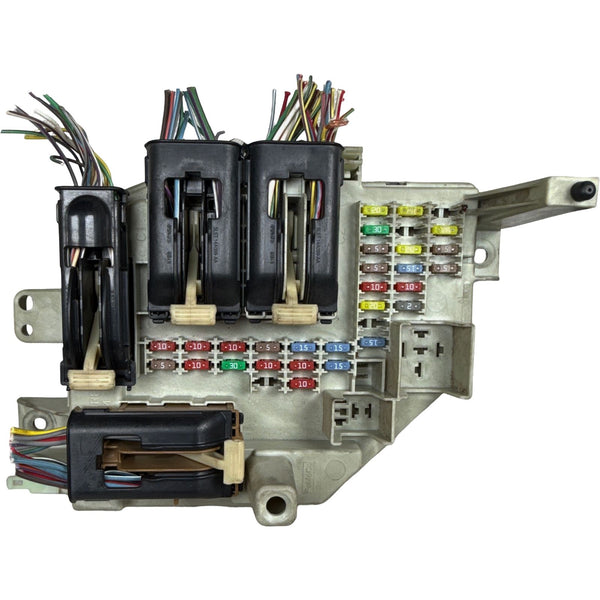
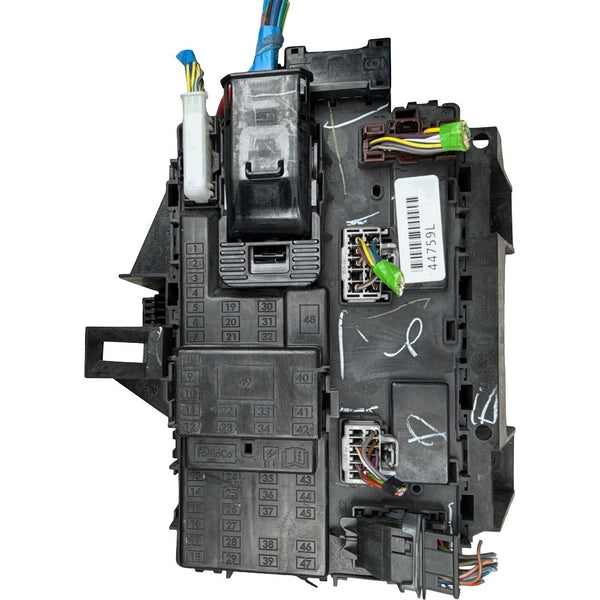
Bad Body Control Module (BCM): Symptoms, Codes & Fix


A failing body control module (BCM) usually shows up as random electrical gremlins — interior lights, door locks, wipers, or chimes acting up on their own — often alongside an intermittent no-start or a battery that's dead by morning. Because the BCM is the hub that manages your car's body electronics, one bad module can mimic a dozen unrelated problems at once. The fix is a tested-OEM replacement matched to your exact vehicle and, on most platforms, programmed to the car.
What the BCM actually does
The body control module is the small computer that runs the "body" side of your vehicle's electrical system — the parts that aren't the engine or transmission. Depending on the make, it manages things like interior and exterior lighting, power door locks, the wipers and washers, warning chimes, the horn, keyless entry, and on many vehicles it plays a role in the anti-theft handoff that lets the engine start. It also talks to the other modules over the car's data network and helps manage how the electrical system powers down and "sleeps" after you shut the doors and walk away.
Because so much runs through that one module, a fault inside it rarely looks like one clean problem. It looks like several small, unrelated things going wrong at the same time — which is exactly why a bad BCM is so often misdiagnosed.
What happens when a BCM goes bad
The tell-tale pattern is multiple, seemingly unrelated electrical faults that come and go. The most common complaints we hear:
- Random electrical gremlins — interior lights that won't shut off (or won't come on), locks that cycle on their own, wipers or washers that act up, false warning chimes, an intermittent horn.
- Intermittent no-start — the car cranks but won't fire, or won't crank at all, on platforms where the BCM is part of the starter-enable or anti-theft handoff. It's often intermittent: fine one morning, dead the next.
- Battery dead overnight (parasitic drain) — a BCM that won't go to sleep keeps drawing current after the car is off, so the battery is flat by morning even though it tests fine.
- Flickering or false dash warnings — lights and messages that don't match anything actually wrong with the car.
- Water damage — on vehicles where the BCM is mounted low behind a kick panel, a leaky windshield, sunroof drain, or door seal can soak it. Corroded pins and internal moisture are a common cause of these faults.
One important caution: not every no-start or dead battery is the BCM. A weak battery, a bad ground, corroded connectors, or an aftermarket accessory left live can all cause the same symptoms. The BCM is a strong suspect when several body-electrical faults show up together and come and go — not the default answer to any single problem.
How to test a body control module
The goal is to confirm the module before you replace it. Work in this order:
- Rule out the cheap stuff first. Load-test the battery, check the charging system, and inspect the main grounds and the BCM's own connectors for corrosion or moisture. A weak battery or a bad ground mimics BCM behavior and is far cheaper to fix.
-
Scan every module, not just the engine. A failing BCM often doesn't store a code in itself — its fingerprints show up as U-codes in the other modules. The classic one is
U0140, "Lost Communication With Body Control Module," logged by the rest of the network when it can no longer talk to the BCM. A basic code reader that only reads powertrain codes will miss this — you need a scan that reads body and network (U-series) codes. - Do a parasitic-draw test if the battery keeps dying. With the car off and the doors closed, let all the modules power down and go to sleep — that can take 30 to 45 minutes — then measure the key-off current draw. Once everything is asleep it should typically fall to under about 50 milliamps. If it stays high, start pulling fuses to find the circuit that won't sleep; a BCM stuck awake is a common culprit.
- Recreate the intermittent fault. Wiggle-test the harness and connectors at the BCM while watching the symptom. Intermittent gremlins that move with a connector point to a wiring or pin problem you can fix without a new module.
It's also worth checking your VIN for any open recalls or technical service bulletins at NHTSA before you spend on parts — some body-electrical faults are covered by a manufacturer campaign.
If the body-electrical faults are stored as lost-communication codes, the connectors and grounds are clean, and the module won't behave, you've isolated the BCM. Related electrical modules fail the same way — if your symptoms point more at a random power-distribution or fuel-pump issue, see our write-up on Dodge/Chrysler TIPM failure symptoms; if the car cranks but won't fire and it's an anti-theft complaint, start with how to tell if a Ford PATS anti-theft system is failing.
The fix: a tested-OEM BCM
When the module is confirmed bad, the reliable fix is a tested OEM body control module — the factory part, bench-verified before it ships. We favor tested-OEM over aftermarket here for a specific reason: the BCM is tightly tied to your vehicle's exact configuration and software, and a genuine factory unit is the closest match to what left the plant. Every BCM we sell is pulled, cleaned, and tested before it goes out.
On most modern vehicles a replacement BCM also has to be programmed and configured to the car after it's installed — matched to the VIN and, on anti-theft platforms, relearned so the immobilizer will let the engine start. Plan for that step (a dealer or a locksmith/tech with the right scan tool can do it) rather than expecting plug-and-play. You can browse our tested-OEM body control modules by vehicle to find the match for yours.
Fitment: why the BCM must match your exact vehicle
BCMs are among the most vehicle- and configuration-specific modules in the car. The correct one matches your exact year, make, and model — and often the trim, build date, and option package as well. Two of the "same" cars can take different BCMs, and the part number on your old unit is the surest way to match it.
Because of that, we list BCMs individually by vehicle and part number rather than as a one-size range. Pull the OEM number off your existing module (and note your VIN and build date), then match it to the listing. On a 2013–2014 Ford F-150, for example, that number reads like EC3T-14B476-BA; on a 1996 Chrysler Town & Country, Voyager or Dodge Caravan, like P4686727 — if you're unsure, the part number in the title is what to compare against. A wrong-configuration BCM may physically plug in but won't behave, so matching the number matters more here than on almost any other part.
Frequently asked questions
What are the symptoms of a bad body control module?
The most common symptoms are random, intermittent electrical faults happening together — interior lights, locks, wipers, or chimes acting up on their own — often with an intermittent no-start or a battery that's dead by morning from a parasitic drain. Because the faults come and go and don't seem related, a bad BCM is easy to misdiagnose.
Can a bad BCM cause a no-start?
Yes, on vehicles where the BCM is part of the starter-enable or anti-theft handoff. The car may crank but not fire, or not crank at all, and it's often intermittent. But a no-start has many causes — confirm the BCM with a scan and connector check before replacing it.
Can a failing BCM drain my battery?
Yes. If the BCM won't enter sleep mode after you shut the car off, it keeps drawing current and can flatten a healthy battery overnight. A parasitic-draw test — measuring key-off current after the modules power down — is how you catch it; a normal draw settles to roughly under 50 milliamps.
Does a replacement BCM need to be programmed?
On most modern vehicles, yes. The new module has to be programmed and configured to your VIN, and on anti-theft platforms relearned to the immobilizer so the engine will start. A dealer or a tech with the right scan tool handles that — plan for it rather than expecting plug-and-play.
Will a BCM with the same part number from another car work?
Matching the OEM part number is the right starting point, and it's the surest way to get a compatible module. Just confirm year, make, model, and — where it applies — trim and build date too, since configuration can vary within the same number. Then expect to program it to your vehicle after install.
How do I know it's the BCM and not a wiring or ground problem?
Rule out the wiring first. Load-test the battery, check the main grounds, and inspect the BCM's connectors for corrosion or moisture. Then scan for lost-communication (U-series) codes and wiggle-test the harness. If the grounds and connectors are clean and the faults stay, the module itself is the suspect.
Not sure which module you're chasing? Send us the symptoms and your VIN and we'll help you pin it down before you buy. — Hubes
Written by
Chris Huber, Owner — Hubes Hub
30 years in OEM auto parts — most of it spent in Michigan. At Hubes Hub I source, test, and ship every OEM part that leaves the shop — and I answer the inbox. If you're working through a tough repair and aren't sure which part you need, message me before you order.
More about the shop →