How to Tell If Your Ford PATS Anti-Theft System Is Failing (1996–2004)

If your 1996–2004 Ford cranks but won't start — the engine spins but never catches, and the theft light is flashing — the PATS (Passive Anti-Theft System) usually isn't reading your key. PATS is Ford's factory immobilizer: a transponder chip in the key, a transceiver ring (an antenna) around the ignition lock, and the PCM that has to recognize the key before it will fuel and fire the engine. It checks the key before the engine can run, so a PATS fault is a no-start, not a stall. Here's how to tell.
What are the symptoms of a failing Ford PATS?
A PATS problem shows up at start-up, and the theft light is almost always part of the picture. The starter cranks normally, but the PCM never authorizes the engine to run because it couldn't verify the key. Four signs come up again and again:
- Cranks but won't start. The engine spins over and never catches — PATS is holding back fuel and spark because the key wasn't recognized. The starter working rules out a dead battery or bad starter.
- Theft light flashing or staying lit. A slow flash with the key off is the normal armed state. A rapid flash, or a light that stays on when you try to start, means PATS didn't read the key. (A brief solid glow right at key-on is just the system's self-check.)
- Starts some days, dead others. That on-again/off-again pattern is the signature of a transceiver ring whose antenna is breaking down — it reads the key sometimes and misses it others.
- A new key won't program. If a fresh transponder key refuses to learn, the reader or module usually isn't talking to it — the key isn't the problem.
How do you diagnose a Ford PATS problem?
PATS is electrical, so read the theft light and the keys first, then scan — and know going in that a basic code reader won't see PATS faults. Work it in order before you replace anything:
- Watch the theft light. Key to on: it should flash briefly, then go out when the key is recognized. If it flashes rapidly or stays on through a start attempt, PATS rejected the key — start there, not at the engine.
- Try the spare key. If the spare starts it and the first key doesn't, the first key's chip is the fault. If both keys behave the same — intermittent or dead — the transceiver ring or module is the suspect, not the keys.
- Scan with a PATS-capable tool. PATS faults live in the body/PATS module, so a basic OBD-II reader won't pull them — you need Ford IDS, FORScan, or a scan tool that reads the security module to see the stored codes.
- Rule out the simple stuff. PATS lets the engine crank — it only blocks the run. So a no-crank is a battery, starter, or ignition switch, not PATS. And the PATS chip is passive (no battery in it), so a dead key-fob battery doesn't cause this.
What fixes a failing PATS — key or transceiver?
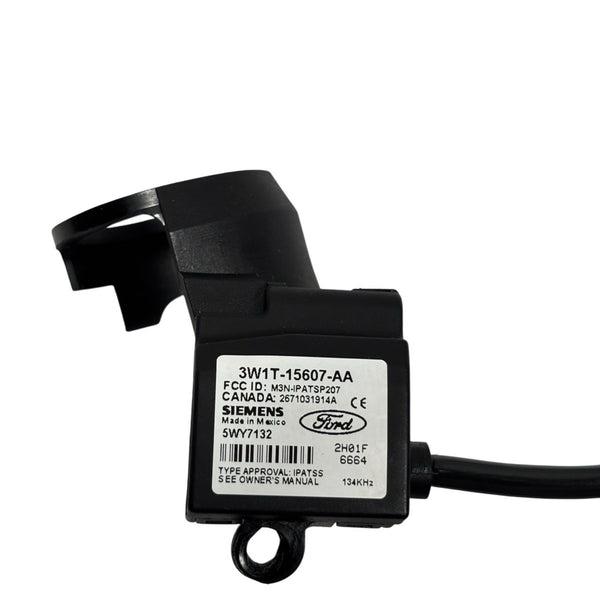
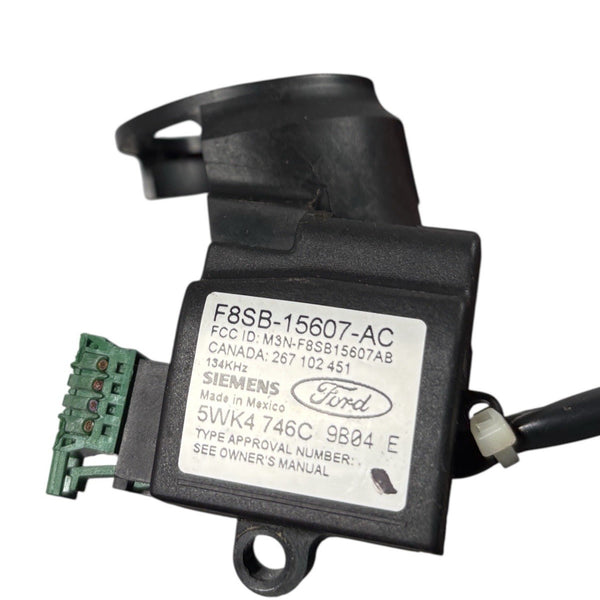
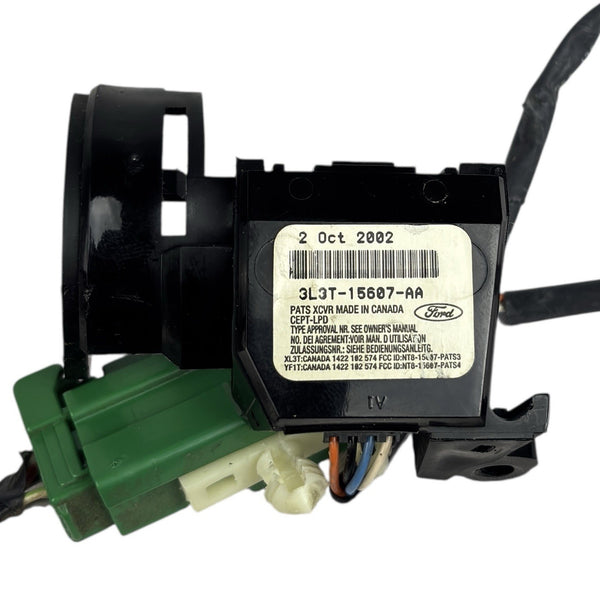
Rule the key out first, because a worn or damaged transponder key is one of the more common causes — and the spare-key test points right at it. If the key checks out, the part that fails most on these Fords is the transceiver ring: the antenna that wraps around the ignition lock and reads the key chip. When its winding breaks down it reads intermittently, which is why the car starts one day and not the next. OEM matters here — the ring is a tuned antenna at a specific frequency, so a no-name aftermarket ring often reads weakly and leaves you with the same intermittent no-start. We pull and test OEM PATS transceivers from real vehicles so the key reads on the first turn the way the factory part did. A fault stored in the PATS module or PCM is the less common case, and that one needs programming, not just a part.
Which Fords does this affect?
Ford rolled PATS out gradually, not all at once — so the year that matters is the one for your model. The Mustang and the Duratec and SHO Taurus got it in 1996, the Expedition in 1997, the Explorer in 1998, the Crown Victoria / Grand Marquis / Town Car in 1998, the F-150 in 1999, and the Escape in 2001 — and it stayed on most of the lineup well past 2004. That means a 1996 or older F-150 doesn't have PATS, while a 1999 one does, so don't assume by the make alone. The transceiver ring's part number also changes by year and platform, so match your exact year and model against the Vehicle Immobilizers collection rather than guessing — the right OEM transceiver for your specific Ford is the one that reads the key cleanly every time.
— Hubes