Understanding Immobilizers: Why Your Late‑90s to 2010 Vehicle Won’t Start

Your car cranks fine. The battery is good. The starter is working. The engine turns over and then — nothing. It either won't fire at all, or it fires for a second and immediately dies. The security light is on, or flashing, or did something weird when you turned the key.
That's an immobilizer. And if your vehicle is from the late 1990s through about 2010, you're dealing with a first-generation system that was simple and reliable for years — right up until it wasn't.
Here's what these systems actually do, why they fail, and how to tell which component is causing your no-start.
What an Immobilizer Does
An immobilizer is an anti-theft system that requires your key to authenticate before the engine is allowed to run. It does this through a transponder chip embedded in the key head — when you insert the key and turn the ignition, a small antenna ring around the ignition cylinder reads the chip. The signal passes to a security control module, which checks it against the vehicle's stored codes, and if everything matches, sends authorization to the PCM (powertrain control module) to allow fuel delivery and spark. No match, no start.
The result from the driver's seat: the engine cranks normally but won't fire. Or it fires briefly and immediately stalls. The mechanical side of the engine is completely fine. The electronics simply won't allow it to run.
Every major American manufacturer built this into their vehicles during this era, and every one of them named it something different.
Ford PATS — Late 1990s Through 2010
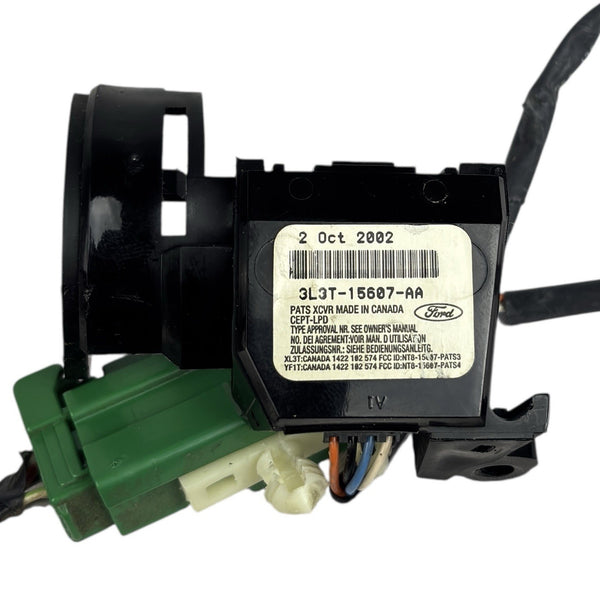
Ford's system is called PATS — Passive Anti-Theft System. It rolled out starting in 1996 on the Mustang and spread across the full lineup through the 2000s. If you've got an F-150, Explorer, Expedition, Ranger, Taurus, Focus, or Mustang from this era, you have PATS.
The two components most likely to fail are the transponder key itself (the chip inside the key head wears out or gets damaged) and the PATS transceiver ring — the antenna coil mounted around the ignition cylinder that reads the key. When the ring fails, the module never receives the key signal, and the vehicle goes into theft lockout regardless of whether the key is valid.
You'll typically see a theft indicator light acting up on a no-start condition. On PATS-equipped vehicles, a rapidly flashing theft light points to a key the system can't read; a solid light can mean the same thing or a stored fault. Either way it's telling you PATS is unhappy — confirm with a scan tool rather than reading too much into the exact blink pattern.
Chrysler / Jeep / Dodge SKIM — 1998 Through 2010
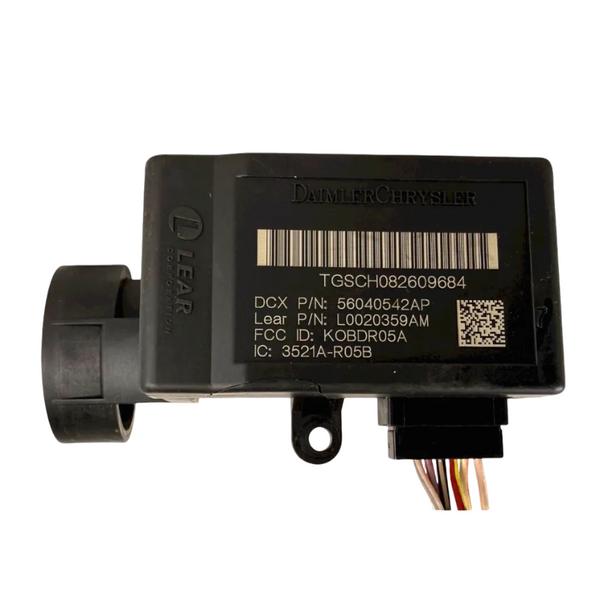
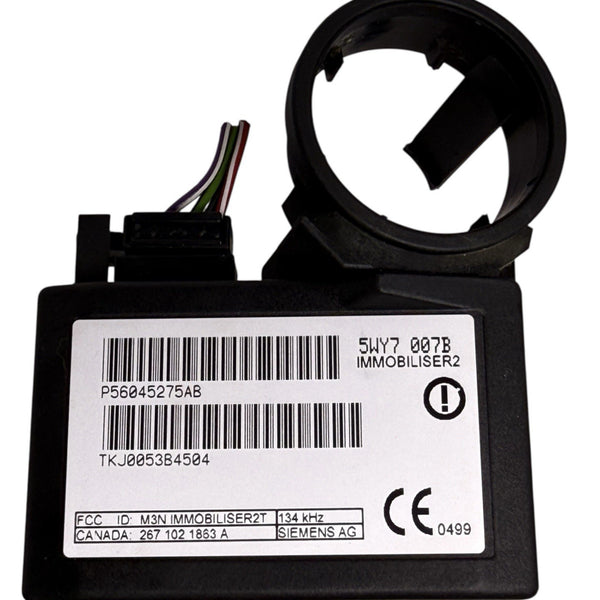
Chrysler's version is called SKIM — Sentry Key Immobilizer Module. It covers essentially everything in the Chrysler, Dodge, and Jeep stable during this period: Grand Cherokee, Commander, Wrangler, Ram 1500/2500/3500, Durango, Caravan, PT Cruiser, 300, and more.
The SKIM module is a separate unit — typically mounted near the steering column — and it's notably sensitive to a few things that are common in aging vehicles: low voltage events, battery disconnects, and moisture. A weak battery that's been dragging the system down for a month can desync the SKIM from the PCM. A jump start done with the key in the ignition can do it too.
Symptoms on a failing SKIM are a red security light that stays solid on a no-start, or a stored immobilizer code like P1686. You may also see the infamous "No Bus" message on the instrument cluster — but that's a broader data-bus communication failure (often the wiring or the PCM), not a SKIM symptom on its own, so diagnose the bus before condemning the module.
One important note: SKIM modules must be programmed to the vehicle's VIN and keys after replacement. The module itself is the easy part. Budget for programming when you're planning the repair.
GM Passlock and Passkey III — 2000 Through 2007
GM used two distinct systems during this period, and they're different enough that it's worth knowing which one you have.
Passlock uses a sensor in the ignition lock cylinder itself — there's no transponder chip in the key. The sensor reads a magnet inside the lock cylinder and sends a resistance value to the BCM (body control module). If the resistance value is wrong (or the sensor fails), the BCM withholds fuel authorization. Passlock failures are extremely common on mid-2000s Impalas, Malibus, Grand Ams, and full-size trucks. The signature symptom is a security light that illuminates during a no-start, followed by a 10-minute relearn cycle where you leave the key in the Run position until the light goes out, then restart. That works temporarily — until it doesn't anymore, and then you're doing it every time.
Passkey III is a true transponder system — chip in the key, antenna ring around the ignition. It functions similarly to Ford PATS and has similar failure modes: worn key chips and failed transceiver components.
If you're not sure which system your GM vehicle has, the Passlock sensor is visible inside the ignition lock housing (the lock cylinder has to come out to see it). Passkey III vehicles have a visible ring around the ignition cylinder, similar to PATS.
Why These Systems Fail
First-generation immobilizers weren't built with 20 years of service in mind. The failure modes are consistent across all three platforms.
Key chips wear out — the transponder chip inside the key head has a finite life, and a key that's been on a heavy keyring bouncing around for 150,000 miles has taken a lot of mechanical stress. A cracked or worn key is often the first thing to check before condemning the module.
Antenna rings fail — the transceiver coil around the ignition cylinder is a passive component sitting in a high-vibration, high-heat environment. The coil wire fatigues and develops breaks, especially on vehicles with a lot of miles.
Modules lose their programming — voltage events are the main culprit. A dead battery, a hard jump start, or a battery replacement done with the ignition on can corrupt the communication relationship between the security module and the PCM.
Corrosion — these modules are typically mounted near the steering column in an area that sees temperature swings and occasional moisture intrusion. Connector corrosion degrades the signal over time.
How to Tell Which Component Is the Problem
The most reliable diagnostic path is a scan tool with manufacturer-specific coverage — not just a generic OBD-II reader, which won't communicate with most body and security modules from this era. You need a tool that can read B-codes (body codes) and communicate with the security module directly.
What you're looking for: stored security codes, communication faults between the security module and PCM, and whether the module is responding to key reads at all. A module that's not responding to any key — including known-good programmed keys — is likely failed. A module that's responding but rejecting valid keys may have lost its programming.
On Ford PATS specifically, Ford's PATS Parameter Reset procedure (available through an IDS scan tool or compatible aftermarket tool) can re-establish module-PCM communication without replacing hardware — if the module is still functional.
On Chrysler SKIM, once the module has lost PCM sync, reprogramming typically requires a dealer-level scan tool or a locksmith with StarScan/wiTECH access.
On GM Passlock, the 10-minute relearn procedure can restore function temporarily, but a sensor that's drifted enough to require repeated relearns is failing and needs replacement.
Why OEM Modules Are the Right Answer
Aftermarket immobilizer modules have a poor track record on these platforms — incorrect factory programming, communication protocol mismatches with the PCM, and failure during key programming are all documented problems. The security module and PCM were calibrated together at the factory. An OEM replacement module, properly programmed, restores that relationship. An off-brand module may never communicate correctly regardless of how carefully it's programmed.
For SKIM, PATS transceiver rings, and Passlock housings, we stock tested OEM units pulled from clean donor vehicles. If you're sourcing one of these parts, confirm the part number matches your application — within the same model year, different engine or key configurations can require different module variants.
Frequently Asked Questions
Can I start my vehicle if the immobilizer module is failed? Not without bypassing the system, which defeats the anti-theft function and is generally not practical on these platforms. Replacement (with programming) is the correct path.
My car starts sometimes and not others — is that the immobilizer? Intermittent no-starts are consistent with a failing antenna ring or a key with a deteriorating chip. The connection is made on some attempts and not others depending on key position or temperature. Worth diagnosing before the failures become consistent.
Do I need a new key when I replace the SKIM module? Not necessarily — your existing keys can often be reprogrammed to a new module. Confirm with the locksmith or shop doing the programming before you order new keys.
Can I replace a PATS transceiver ring myself? The physical installation is accessible. Programming after replacement depends on your year and configuration — some PATS setups allow the existing programmed keys to re-sync automatically; others require a scan tool. Research your specific application before assuming it's plug-and-play.
What's the difference between a PATS module and a PATS transceiver ring? The transceiver ring is the antenna coil around the ignition cylinder. The PATS module (sometimes called the PATS control module, PCM-integrated or standalone depending on the year) manages the authentication logic. They can fail independently.
Is a used immobilizer module safe to use? Yes, with the understanding that it needs to be reprogrammed to your vehicle and keys after installation. The hardware is OEM; the programming is what ties it to your specific vehicle.
We stock tested OEM SKIM modules, PATS transceiver rings, and GM Passlock components — confirmed functional before they ship. Browse our immobilizer inventory, or send us your year, make, model, and part number if you want confirmation before you order.
— Hubes