OEM vs Aftermarket Auto Parts: What You're Actually Getting


In 30 years of moving parts around the automotive supply chain, I've seen two kinds of buyers come out ahead: the ones who understand what OEM means before they order, and the ones who learn it the expensive way on the second repair.
This is the short version of a conversation I have a lot.
What Does OEM Mean?
OEM stands for Original Equipment Manufacturer. An OEM part is the exact part — or a part built to the exact specification — that was installed in your vehicle when it left the factory. It was made by the same manufacturer, on the same production line, with the same tolerances, the same materials, and the same quality controls.
When Ford built your F-150, the clock spring inside the steering column came from a specific supplier who built it to Ford's specifications. That part is OEM. When that same supplier makes a replacement part to the same spec and ships it to a Ford dealership, that's also OEM. When we pull that same part off a wrecked F-150 and test it before it ships to you, that's still OEM — it's the same part, same origin, same quality. It's just been inside a different truck.
What OEM is not: it's not automatically "dealer only." Many OEM parts are available outside the dealership. What makes a part OEM is its origin and specification, not where you buy it.
What Does Aftermarket Mean?
Aftermarket means the part was made by a third-party manufacturer — not the original vehicle manufacturer, not their direct supplier. The aftermarket company designed their own version of the part, made it to their own tolerances, and sells it as a replacement for the original.
Aftermarket is a big category. At the top end, there are reputable suppliers who build quality replacement parts with good engineering and reasonable materials. At the bottom end — and this is where a lot of online shoppers end up — there are no-name manufacturers, often overseas, who build to the lowest possible cost point with little quality control.
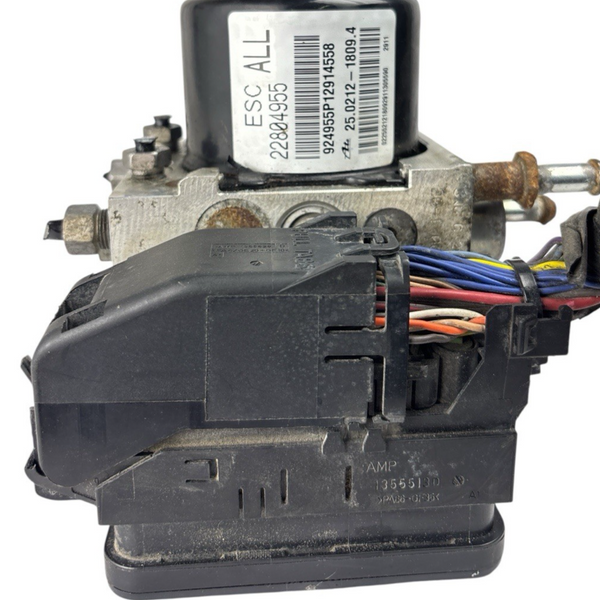
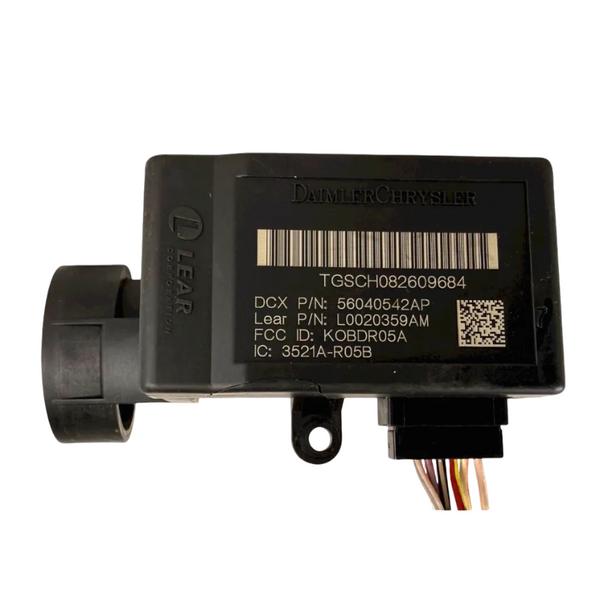
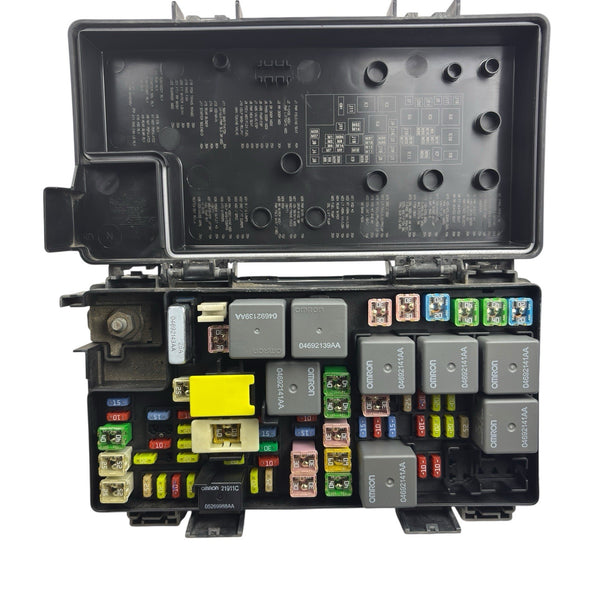
Here's the practical truth after 30 years: for electronic components — clock springs, immobilizer modules, ABS modules, throttle bodies, TIPMs, instrument clusters — the gap between OEM and no-name aftermarket isn't a matter of preference. It's a matter of whether the part actually works. These are precision electronic assemblies. The tolerances matter. The components matter. A clock spring that fires an airbag has to fire an airbag every time, not 80% of the time.
Why Does Aftermarket Exist If OEM Is Better?
Cost, mostly. And for some parts, aftermarket is perfectly fine. A fuel filter, a serpentine belt, an air filter — these are simple components with simple requirements. Reputable aftermarket brands build them well. Nobody needs to buy an OEM oil filter at dealer prices.
But there's a big difference between "a rubber gasket is a rubber gasket" and "an electronic control module that communicates with five other modules at 500 signals per second is a precision instrument."
The marketing doesn't always make that distinction. A lot of aftermarket electronic parts are sold with the same confident product copy as the quality stuff — and they're not the same thing. That's not cynicism, it's just what I've seen come back to customers who thought they saved money the first time.
What Does "Chinese Junk" Actually Mean?
I'm going to be direct about this because customers ask. When people in this industry refer to low-quality aftermarket parts — especially electronic components sold online at suspiciously low prices — they're often referring to parts manufactured in Chinese factories with no OEM relationship, sold under generic or no-name brands, with minimal testing.
That doesn't mean every part made in China is bad. It doesn't mean every cheap part will fail. It means that the category "unbranded aftermarket electronic component from an unknown manufacturer" has a failure rate that nobody in this business wants to deal with — and when it fails, it's usually after you've already paid a shop to install it.
The labor to remove and reinstall a throttle body or a SKIM module costs money regardless of whether the part lasts. Buy it once. Buy it right.
Why Buy a Salvage OEM Part Instead of a New OEM Part?
New OEM from the dealer is the gold standard — it's untouched, it's warrantied, and it's available. It's also expensive. For older vehicles, it's sometimes unavailable — the part has been discontinued, or dealer inventory is depleted.
A salvage OEM part is the same part, from the same factory, that was installed in a vehicle by the manufacturer. It's been in service, which means it's proven — the part ran for 80,000 or 120,000 miles before the vehicle was totaled or retired. We pull it, test it, clean it, and ship it.
For electronics especially, this is a better outcome than the bottom-shelf aftermarket alternative. You're not gambling on whether an unknown factory built a PCB that matches OEM tolerances. You're getting the actual OEM component — the one the manufacturer trusted to run the car — at a fraction of new dealer pricing.
How to Tell What You're Getting When You Order
A few practical filters before you buy any auto part online:
Ask for the part number. Genuine OEM parts have manufacturer part numbers. If a seller can't give you one, or gives you a generic number, that's a signal.
Look at the seller's feedback and history. Not the star rating — the actual reviews. Look for reviews from people describing the same part, the same application. Do they mention it worked? Do they mention fitment issues? Do they mention it failed in six months?
Understand the return policy. A seller who's confident in their parts has a return policy. A seller moving volume on low-quality goods makes returns difficult.
For electronic components, buy OEM. This isn't a sales pitch — it's the professional recommendation after 30 years. Clock springs, immobilizer modules, ABS modules, TIPMs, throttle bodies, instrument clusters, BCMs. Buy OEM. The labor on the second install costs more than the difference.
Frequently Asked Questions
Is OEM always more expensive than aftermarket? New OEM from the dealership, yes, almost always. Salvage OEM parts are often less expensive than new aftermarket equivalents — and they're genuinely OEM.
Are dealer parts the same as OEM parts? Generally yes — dealers source directly from the manufacturer or their authorized suppliers. But some dealers also stock aftermarket parts. Always confirm.
What's a "remanufactured" part? A remanufactured part is an OEM core (or sometimes aftermarket) that's been rebuilt to spec — typically cleaned, worn components replaced, and tested. Quality varies significantly by remanufacturer. For electronic modules, we generally prefer clean tested OEM salvage over unknown remanufacturing.
Can I use aftermarket on an older vehicle without electronics issues? For non-electronic mechanical components on older vehicles, quality aftermarket is often fine. The caution zone is electronic modules, sensors with tight calibration requirements, and safety systems.
What does "tested" mean when a salvage seller says a part is tested? It should mean the part was bench-tested or functionally verified — not just visually inspected. Ask the seller specifically what their testing process is. We bench-test electronic components at Hubes Hub before they ship.
We carry genuine OEM salvage parts — Ford, Dodge, Jeep, Chevy, GM — tested and ready to ship. If you're not sure whether a salvage OEM part is the right call for your repair, message us before you order. That's a conversation I'm happy to have.
— Hubes
Written by
Chris Huber, Owner — Hubes Hub
30 years in OEM auto parts — most of it spent in Michigan. At Hubes Hub I source, test, and ship every OEM part that leaves the shop — and I answer the inbox. If you're working through a tough repair and aren't sure which part you need, message me before you order.
More about the shop →