ABS Light On? How to Diagnose a Failed ABS Module

If your ABS light is on, the first thing to know is this: your brakes still work. The base hydraulic system that actually stops the car is separate from the anti-lock system. What you've lost is the anti-lock function — and, on most vehicles, traction control and stability control along with it. The car will stop. It just won't have the computer pumping the brakes for you in a panic stop.
The second thing to know is that an ABS light doesn't automatically mean a bad module. It might be a wheel-speed sensor, wiring, or a connector. But the ABS module — the brain of the system — is one of the most common failures we see, and it's the one people most often get wrong. After 30 years moving these parts, here's how to tell what you're actually dealing with before you spend a dime.
What an ABS Module Actually Does
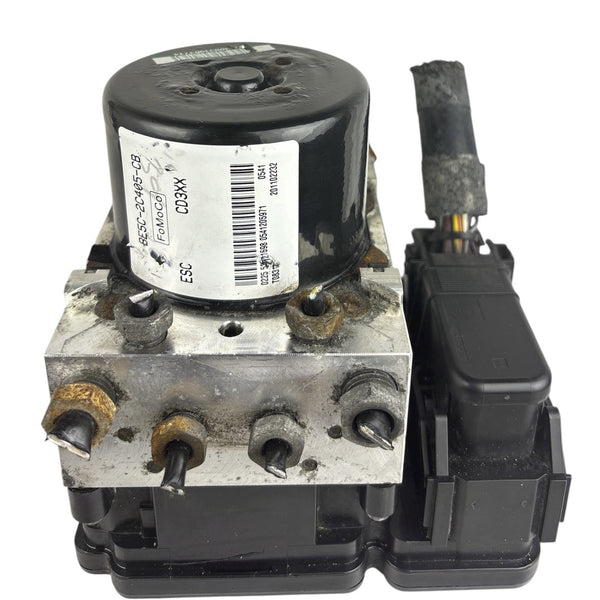
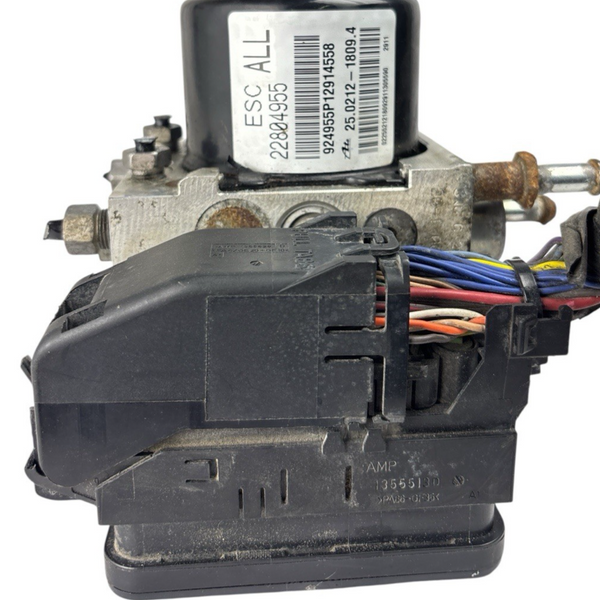
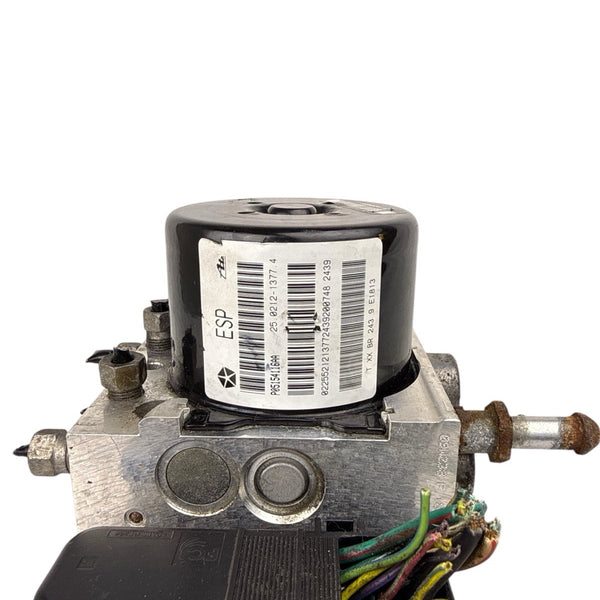
ABS stands for anti-lock brake system. The ABS module — you'll also see it called the EBCM (electronic brake control module) or the HCU/pump assembly when the electronics are bolted to the hydraulic unit — is the computer that runs it. It reads the speed of each wheel, and the instant one wheel is about to lock up under braking, it rapidly releases and reapplies pressure to that wheel so you keep steering control.
That same module is usually the hub for traction control and stability control too. So when it fails, you often don't get one warning light — you get three: ABS, traction control, and stability. They come on together because they all run through the same brain.
The Symptoms: What You'll Notice First
The pattern is consistent across most makes:
- ABS light stays on — sometimes with the traction control and stability lights right next to it.
- Anti-lock stops working — in hard braking the pedal goes firm and the wheels can lock instead of the system pulsing.
- Traction / stability control disabled — the system shuts itself off because it can't trust the data.
- Speedometer drops out or reads erratically on some vehicles — the same wheel-speed data feeds the cluster.
- The lights come and go at first, then stay on for good. Intermittent is how a lot of module failures start.
What you usually won't get is a car that won't stop. If you've genuinely lost braking, that's a hydraulic problem — stop driving and get it looked at. The ABS light on its own is a "fix it soon," not a "pull over now."
The Trouble Codes That Point at the Module
Plug in a scan tool that reads ABS codes (a basic code reader often won't — you need one that pulls chassis "C" codes). What the codes say matters more than the fact that there are codes:
- Internal codes point at the module. Pump motor circuit, valve relay, internal control circuit, or an EBCM/internal failure code means the brain itself is the problem. Those don't fix themselves and they don't fix with a sensor.
- A single wheel-speed sensor code (one corner — left front, right rear, etc.) usually points at that sensor or its wiring, not the module.
- All four wheel-speed codes at once can be a power, ground, or connector issue feeding the module — check the obvious stuff before condemning the unit.
Write the codes down before you clear them. They're the single best clue you have, and they're what we'll ask about if you message us.
Why ABS Modules Fail
It's almost always the electronics, not the hydraulics. These modules live in a brutal spot — bolted near the engine or frame, cooked by heat, soaked by road spray, and vibrated for a hundred thousand miles. Inside, the common failure is the circuit board: solder joints crack, internal relays wear out, and the pump-motor driver circuit gives up. On a lot of vehicles it's a known, age-and-mileage failure, not a fluke. When a part fails the same way across thousands of trucks, that's not bad luck — that's the design showing its age.
The Makes and Years We See Most
ABS modules are our single biggest category, so we pull a lot of them. The ones that come through most often:
- 2008–2012 Ford Escape and 2008–2011 Mercury Mariner (the twins) — by far the most common ABS modules we sell.
- Chrysler, Dodge, and Jeep — Caravan/Town & Country, Ram, and Grand Cherokee modules are steady sellers.
- GM — Chevy, GMC, Buick, and Pontiac EBCMs across the mid-2000s to early 2010s.
This isn't a complete list — the catalog spans domestic and import makes across a lot of years. The fastest way to know what we have for your vehicle is to tell us your year, make, and model and let the picker show you, or browse the ABS modules in stock directly. If you don't see yours, message me — we may have it pulled and not yet listed.
Is It the Module or a Wheel-Speed Sensor?
This is the question that saves people the most money, so it's worth slowing down on. A wheel-speed sensor is cheap. An ABS module is not. Don't buy the expensive part to fix the cheap part's problem.
Quick way to sort it out:
- One wheel's code, light comes on around a certain speed or while turning → suspect that corner's sensor or tone ring first.
- Internal/pump/relay codes, or the system won't even run its self-test → that's the module.
- Lights came on right after brake work or a wheel-bearing job → check that you didn't disturb a sensor or connector before blaming the module.
If the codes point inside the module and the wiring checks out, replacing the module is the fix. If you're not sure, that's exactly the kind of thing I'd rather you message me about before you order than after.
Why an OEM Module Is the Right Fix
An ABS module is a precision electronic assembly that manages braking. This is not the part to gamble on with a no-name aftermarket unit. We've written before about what OEM actually means — but on a brake computer it's simple: you want the same part the manufacturer trusted to run the car, built to the original spec.
A new module from the dealer is the gold standard, and it's expensive — often unavailable for older vehicles. A salvage OEM module is the same factory part, pulled from a vehicle, tested, and sold for a fraction of dealer pricing. That's what we do: we pull it, test it, and ship it Monday through Friday, same day on orders before 3pm Eastern. One note before you order — some modules need to be programmed or coded to your vehicle after install. It varies by make and year, so check your repair info or ask us, and we'll tell you straight whether yours is plug-and-play.
Frequently Asked Questions
Can I still drive with the ABS light on? Short distances, carefully, yes — your regular brakes still work. What you've lost is anti-lock, traction, and stability control, so leave more room and take it easy in the rain or snow. If the brake (red) light is also on, that's a different, more serious problem — get it checked before you drive.
Will a failed ABS module keep my car from passing inspection? It depends on the state, and the rule usually runs the other way than people expect — most states won't fail you for an amber ABS light on its own. A red brake warning light is the one that can fail you, and a few states do check that traction and stability control are working. Either way it's worth fixing before you go.
Do I need to program a used ABS module? Sometimes. Some modules are plug-and-play; others need to be coded to the vehicle with a scan tool after install. It depends on the make and year — tell us your vehicle and we'll tell you which camp yours is in.
How do I know it's the module and not a sensor? The trouble codes. Internal codes (pump motor, valve relay, internal control circuit) point at the module. A single wheel's speed-sensor code points at that corner. Pull the codes before you buy anything.
Why buy a salvage OEM module instead of new? A salvage OEM module is the same factory part at a fraction of new dealer pricing, and for older vehicles it's often the only way to get a genuine OEM unit at all. We test every one before it ships.
What if I'm not sure which part I need? Message me. Send your year, make, model, and the codes you pulled, and I'll help you figure out the right part before you spend money — that's the whole point of a small shop.
Brakes are the one system where "close enough" isn't good enough, and an ABS fault is the kind of thing that nags at you every time you back out of the driveway. Get the codes, sort the module from the sensor, and put the right OEM part in once. If you're working through this and you're not sure what you need — or money's tight and you just need the truck running to get to work — message me. I'll work with you.
— Hubes